Effects of Heat

This term, our current focus is enhancing our knowledge about different movements of particles. I was able to learn 4 different movements of particles even though I was at ESOl for most of our Science lessons. Those movements are called: Conduction, Convection, Contraction and Diffusion. To help you understand more what those movements of particles define as, here is a brief explanation of what they mean and their differences:

Conduction is the transfer of heat or energy through a material by direct contact. For example, if you put a metal spoon in a hot cup of coffee, the heat travels through the spoon from the hot end to the cooler handle. That heat transfer is conduction. 

Contraction is when energy is removed (colder) or when two different temperatures make contact, particles move slower—causing solids, liquids, and gases to compress or get smaller. An example would be the contraction experiment we did that I will share soon. 

Diffusion is particles that are spread out from high concentration to low concentration units. Hot particles spread faster than cold particles because they have less concentration. 

Convection is the process of how liquids and gasses that rise and cold liquids and gases will sink; a circular movement called convection current. 

A brief vision of what our experiment of each concept consists of is for Convection, our experiment was to light up an empty tea bag and watch it rise up and fall down which the Convection was seen. For Diffusion, we were to compare if Potassium Permanganate diffuses faster on low temperature or high temperature. And lastly—because I was not there for the Conduction experiment—for Contraction, we were to make a soda can compressed or shrunk by dumping a hot soda can with hot water into a tub of cold water.

What I have learned from our Convection experiment was that there is a circular movement in Convection wherein when the particles reached their hottest temperature and became less dense, they will come up again—to move away from the heat source—where there is low temperature and go down again; this circular movement is called convection current. For our Diffusion experiment, what I have learned is that particles spread faster or have less concentration when they are in hot temperature and when they are in put in a cold temperature, they will still spread apart, though not as fast as particles do when they are in hot water. And lastly, what knowledge that our Contraction experiment gave me is that when the hot particles are stuck or can’t go anywhere then make direct contact with cold particles, they will move slower and shrunk or compress.

Out of all the experiments that I was able to do, my favourite one was the Contraction experiment. It is my favourite because it showcases Contraction very well which helped a lot to visualise what Contraction is and what it looks like. I like this experiment the best out of all that I was able to do because it’s the coolest, and most fun. This experiment also showed my class that following instructions when experimenting should be prioritised because if you don’t follow every part of the experiments method, you would not be able to do it right, not everyone would have the same results or just you will just simply fail to do the experiment correctly.

The contraction experiment that we did is called Imploding can. Our aim for this experiment is to visualise what contraction looks like and heighten our current knowledge about contraction. This experiment demonstrates contraction really well as well.

Hypothesis

I think that the soda can will compressed because the hot air will be stuck inside the soda can when it is dump into the cold water which will caused it to shrunk as the hot water makes contact with cold water causing the boiling air inside to be stuck.

For us to be able to be successful with this experiment, we will need some equipment. Those equipment are:

  • Gas Faucet
  • Empty soda can
  • Bunsen Burner
  • Heatproof mat
  • A stand
  • Gauze Mat
  • Bowl
  • Cold Water
  • Ice cubes
  • Thongs

Method

Our first step for this experiment was to set up the equipment that we gathered. What we did to make sure that our equipment was ready to go was to make sure that we have plugged the Bunsen burner into the gas faucet—make sure to have the opening air opened—put the stand over the heatproof mat with the gauze mat positioned above it, and make sure to put the empty soda can at the very top of everything. Once positioned at the very top, fill the empty soda can with water until you’ve filled it 100ml. And lastly, fill your bowl up to 70% or 60% water then put approximately less than six ice cubes in it.

Once everything is set up and ready, open your gas faucet—make sure the colour of your fire is blue and not red or orange. The moment before the exciting part, you need to wait for approximately 10 minutes or more until the water inside the empty soda can is boiling.

Result

When the soda can is finally boiling, turn off your gas faucet and grab your thongs; slowly with two hands, grab the boiling soda can with your thongs and quickly dump it—with the hole facing towards the water—into the bowl of cold water. That moment where the soda can compressed and shrunk quickly,  is the moment where it showed us what contraction is.

Discussion

Some of my classmates’ experiment did not work because they did not quickly dump the soda can once away from the heat source which caused the hot particles to be able to get out of the soda can before making contact with the cold particles in the bowl or the water was just not boiled enough so they were not that hot for the contraction to work.

The soda can compressed and shrunk because when the boiling water and hot can were immediately dumped into the cold water where there are cold particles, the hot particles or hot air inside the soda can can’t go anywhere which caused for both hot and cold particles to mixed and have less energy and which caused them to shrunk and go close together.

Conclusion 

Therefore, I think my group’s experiment for this focus was successful on the first try because we were able to follow each and every step we were given and we did not rush the waiting time. We also made sure that while waiting, everything is still going perfectly. The following instructions also made my hypothesis and the result of the experiment accurate because what I thought would happen, did happen because we followed everything correctly.

Thank you for reading.

Contraction Experiment

Today for Science, we did a fun contraction experiment. This experiment is about learning, understanding and visualising what or how contraction works. For this contraction experiment, the material we used was a gas faucet, an empty can, Bunsen burner, a heatproof mat, a stand, gauze mat, and a tub of water.

To help you understand what we did, here is a brief video explaining the experiment and giving you guys a visual of the experiment.

Contraction Experiment

The result of the experiment was that the soda can shrunk when the hot water and hot can were quickly dumped into the cold water. Why? the soda can be compressed to each other because when the soda can (which has hot particles) was quickly dumped into the tub of water where there are cold particles, the temperature inside the soda can can’t go anywhere which caused for both particles to mixed and have less energy which caused them to shrunk and go close together.

Hauora – Shark Infested Custard (Hula Hoops)

What is Te Whare Tapa Wha?

Te Whare Tapa Wha is a prominent Maori health model representing well-being as a four-sided wharenui. The areas of Hauora are Taha Tinana which means Physical, Taha Wairua that means spiritual, Taha Hinengaro which means Mental and Emotional, and Taha Whanau that means Social.

What activity did we do?

Today for health, we played another game. The main focus of our todays game is hula hoops. Hula hoops are used because the purpose of the game is to get from the start line to the finish line using hula hoops. For this game, we have to be in a group of five and are given four hula hoops. Fortunately, we were able to get big hula hoops. The strategy that my group thought of was to have someone lay out the hula hoops then the rest of the members follow behind.

How was hauora impacted by playing this game? 

I think my Taha Tinana and Taha Whanau is impacted by playing this game because this game requires moving parts of my body to move the hula hoops and this game also requires socialising with other people as it is a 4 people activity.

What is important to know or understand when participating with others? 

Something that is important to know when participating with others is communication and not be selfish and just play the game just by yourself.

Hauora – Marshmallow Towers

What is Te Whare Tapa Wha?

Te Whare Tapa Wha is a prominent Maori health model representing well-being as a four-sided wharenui. The areas of Hauora are Taha Tinana which means Physical, Taha Wairua that means spiritual, Taha Hinengaro which means Mental and Emotional, and Taha Whanau that means Social.

What activity did we do?

For health, we played another game today. This game is called Marshmallow Towers. We have to play this game in pairs and my pair was Jamillah. We were given a bowl for all of our equipment, 8 sticks, and 12 pieces of marshmallows. The context of this game is we have to try and build the highest tower amongst all of the groups in my class using only marshmallows and sticks. For them to stack and fall, you need to put the marshmallow between the sticks that you stacked properly and they need to be stable.

How was hauora impacted by playing this game? 

For me, this game showcases the Taha Tinana, Taha Whanau, and Taha Hinengaro. I think this game showcases those because you use Taha Tinana (physical) because you use your hands to try and stack the marshmallow and sticks together, Taha Whanau (social) because I socialize with other people as it is a pair game, and lastly, Taha Hinengaro (mental and emotional) because you need to think properly about the strategy that you’re going to use for them to stack properly.

What is important to know or understand when participating with others? 

I think that what is important when participating with other is to not be selfish and just play or do them just by yourself. It’s important that you also let them have a try of the game so they could enjoy it as well.

Hauora (Titan) – Drawing Game

What is Te Whare Tapa Wha? 

Te Whare Tapa Wha is a prominent Maori health model representing well-being as a four-sided wharenui. The areas of Hauora are Taha Tinana which means Physical, Taha Wairua that means spiritual, Taha Hinengaro which means Mental and Emotional, and Taha Whanau that means Social.

What’s our activity?

Our game for today is called the Drawing Game. It’s a pair game wherein player 1 and player 2 will need to sit back to back to each other. Player 1 will have a picture which they will describe to player 2 then player 2, will draw it depending on the description that player 1 had given. Both players will need to agree who will describe and who will draw.

My pair for this activity is Jamillah and we did 2 rounds. For the first round, I was the one who draws and she describes the picture to me.

Here is the result for round 1!

How was your hauora impacted by participating in today’s activity? 

I think my Hauora (Taha Whanau, Taha Hinengaro) was impacted by participating in this activity because I have to use my mind so that I could imagine what picture was Jamillah holding so my drawing would be accurate. I also used Taha Whanau (Social) because I was socialising with other people.

What is important to know or understand when participating in a game with others? 

I think that when working with others, it is important to understand communication with their pairs so t

Health – Water Pong blog

What is Te Whare Tapa Wha?

Te Whare Tapa Wha is a prominent Maori health model representing well-being as a four-sided wharenui. The areas of Hauora are Taha Tinana which means Physical, Taha Wairua that means spiritual, Taha Hinengaro which means Mental and Emotional, and Taha Whanau that means Social.

What’s our activity?

Today, for Health we had a game named Water Pong. It’s a game that showcases the Taha Tinana in Te Whare Tapa Wha. This game showcases Taha tinana because it’s a game that moves your muscles and a physical game. This game includes, ping pong, cups, water, and two groups of three or two facing each other. You have to play this game on a long table so there’s enough space for the pingpong to bounce or just basically, making it a bit harder for players to shoot a ping pong. Both ends of the table needs to their cups with water in a pyramid or triangle. Once done, both groups will have a throw alternatively. Whoever ran out cups first wins.

How was your hauora was impacted by participating in today’s activity? 

My Hauora (Taha Tinana) was impacted by participating in the activity because I get to kind of stretch out some of my muscles during the game and I think that it impacted my Physical area in my Hauora. It also impacted my Taha Hinengaro (Mental) because it also made me think of a method to use for my pingpong balls to land inside the cup accurately.

What is important to know or understand when participating in a game with others?

It is important to know that communicating with your teammates is important when participating in games with them so it makes it easier for your team to win the game. It is also important to have teamwork and let others play when working in groups because it is also a way to succeed and win the game.

Social Studies – Greensboro 1960 Sit-in

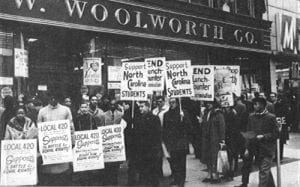
The Greensboro 1960 Sit-In all started on February 1, 1960 at the F.W. Woolworth’s department store lunch counter in Greensboro, North Carolina when four Black North Carolina A&T State University students sat at the “Whites-Only” lunch counter at a F.W. Woolworth’s store in Greensboro, North Carolina, and politely requested service. But unfortunately they were denied service but remained seated until the store closed. It happened because four boys were inspired, in that matter they were furious against the discrimination received from the ruling of the local F.W. Woolworth store. 

By February 4, 1960 from being four students to having hundreds of participants and eventually involved thousands, sparking a nationwide movement against segregation. The protests continued for months until the F.W.Woolworth lunch counter was desegregated on July 25, 1960.

Here is a picture of the Greensboro Sit-In to help you picture more of what the protest looks like:

The result of Greensboro Sit-In was the desegregation of the lunch counters at Woolworth’s and other stores in Greensboro within six months. It also resulted in disrupted business that led to a significant boycott of the stores, further pressuring management to change politics.

And lastly, the Greenboro Sit-In protests matter today as a historical turning point that generated the national Civil Rights Movement by demonstrating the power of nonviolent direct action, leading to the desegregation of lunch counter and contributing to the formation of the Students Nonviolent Coordination Committee.

That’s all for my blog post today, Paalam!

Music – Group Performance

Kamusta bloggers, today my blog post will be all about sharing with you all what our progress in music for our group performance/band.

Our band consists of four members; those four members are: Kate, Kirsten, Samantha, and me (Xyryll). The instruments that were used are Electric Guitar, Piano, Drums, and Vocals. Our roles are Kate is doing the electric guitar, Sam is doing the piano, Kirsten is doing the singing and I’m doing the drums. Our progress is basically just the intro of our instruments and trying to be in sync–especially the drums, electric guitar, and piano. What we are currently trying to aim for is being able to be in sync at least 10 seconds into the song.

That’s all, thank you for reading my blog post, Ka kite!

Drama – What we have been up to

Week 1 – 2

Kia orana readers! My blog post for today is going to be all about what we have been doing for Drama for the past 3 weeks of Term 3. In the first week as well as the second week of Drama, what we learned is fairytales, storytelling and answering what is a story. A story is a connected series of events told through words — written or spoke — imagery (still moving), body language, performance, music, or any other form of communication. We also did some games to reflect on what we learned and expand our knowledge about fairytales and stories. We also watched the Hornby High School Showquest 2025 to visualize what ELEMENT.

Week 3 

The third week, what we did was make a story and share it with the whole class. Which we did by pair or alone; I worked with Kirsten. We also learned what are Myths, Legends, Fables, and Fairytales, Myths are stories that are passed down about how or why something came to be. Legends are designed to teach a lesson about a real person in history, with a few facts dramatically changed. Fables are storied that are passed down, with a good lesson to be learned, and are about animals, plants, or forces of nature that are humanlike. Lastly, fairy tales are stories that are specifically for kids, involve magical stories, have good and evil characters, and generally start with “once upon a time.”

Week 4

For week four, what we did was choose a concept for the whole class to do. Our current concept is a class full of different races, went to a football camp for different reasons. Then they encountered something mysterious.

Literacy – How to make Fairy Bread

Kamusta readers! Today, my task for social studies is to make a blog post filled with my not-so-interesting journey with making my first ever Fairy Bread which I enjoyed a lot since. As well as teaching you how to make it — step by step — utensils that you need and ingredients that you need.

Here is a picture to give an idea of what might a Fairy Bread looks like

Now that you have an idea of what it might look like, here is the list ingredients as well as the recipes you need.

Recipe:

Margarine or butter (which ever you prefer more)

Sprinkles

Utensils:

Bread knife

Butter knife

A plate

Instructions:

The first step is to take the bread out of the bag and place it into the plate.  Afterwards, put some margarine or butter on the bread using a bread knife. The third step is to sprinkle some sprinkles on top of the bread. Lastly, enjoy and eat!

Reflection:

I really enjoyed making Fairy Bread because it’s very easy, fast, not challenging and delicious as well.

That’s all for my blog post today, Ka kite!